
Finding Center
On reactivity, energy management and direction
There are threads that run through us. There are threads that run through our culture, our stories. And there are times when these threads are lifelines.
They come from surprising places. Perhaps a seemingly silly fairytale whose pearl of wisdom suddenly becomes very real to you. That phrase repeated to you by a teacher or mentor that suddenly has application everywhere, not just in the one function you were learning. A quote that caught your ear all those years ago that echoes. Case studies. As I’ve wandered through my life, there are many that return, arising to the surface from some depth, like a well with a spring at the bottom that slowly recirculates all the water.
Whenever you are lost, stay in one place until you’re found.

I come by my reactivity honestly. It’s interwoven into my family history and expressed itself through my mother for much of my life. Now, it must be said that my family is a rather sweet group of people, admittedly a bit odd, each one of us an out-of-the-box thinker who doesn’t quite understand the way this reality works. My family didn’t get the rulebook—we didn’t fit in. As I’ve grown older and gained perspective, I can see how much heart we all have, and how this world isn’t the kindest to folks like us.
My dad summed it up quite well: “I just wanted each of my children to grow up to be decent people.” At the time, I thought this an incredibly simple, if not woefully low, standard. But now? I totally get it. There are just so many ways it can all go so wrong for anyone. Well, Dad, I can say on all four counts that according to that metric, it’s been a success. Decent is kind, decent is honest.
And, we’re human. Frustration would build and build, palpably, until it would erupt. As a child, I was an antenna and grounding rod. Sensitive and aware, as though I were plopped in the middle of this situation to witness, and yet it was so confusing. I learned how to be louder to win, to be secretive to get my way, to blame others to deflect it from myself. I had no way of putting my finger on it, but my frustration was the byproduct of a deep inner knowing that something wasn't right. I didn’t know what “right” was, but it most certainly wasn’t this.
Whenever you are lost, stay in one place until you’re found.
The problem with anger is that because it requires an outside stimulus, there are always victims. Shrapnel. Collateral damage. And it’s always clear who the bomber is. While anger almost always has its reasons, the ends rarely justify the means.
Sometimes, it feels like possession. Something clicks, and suddenly words are flowing hot and fast and loud. It’s inspired, where previously there was only a sickening stagnation. At least something is moving. At least something is happening. And because I’m in the middle of it, I’m in control, come what may.
Anger is the inverted alchemy of the heart and the mind. Emotions are trying to think and thoughts are trying to feel. Anger is reckless power with only a desperate wish for personal relief no matter the cost to anyone else. The amygdala sets off its fight-or-flight alarms, unleashing a flood of stored emotions from previous experiences, but without factual data or narrative to give it perspective. From here, it is incredibly difficult to reactivate frontal lobe function to consciously drive the energy being released from the detonation. PTSD is its most intense expression.
It’s said that at the core of reactivity is the fear of rejection. In humans, because we evolved as such intimately collective creatures, rejection is felt as strongly as the fear of death. And so the habit develops of ending connections prematurely or suddenly, or choosing to be alone rather than risk the danger of being hurt.
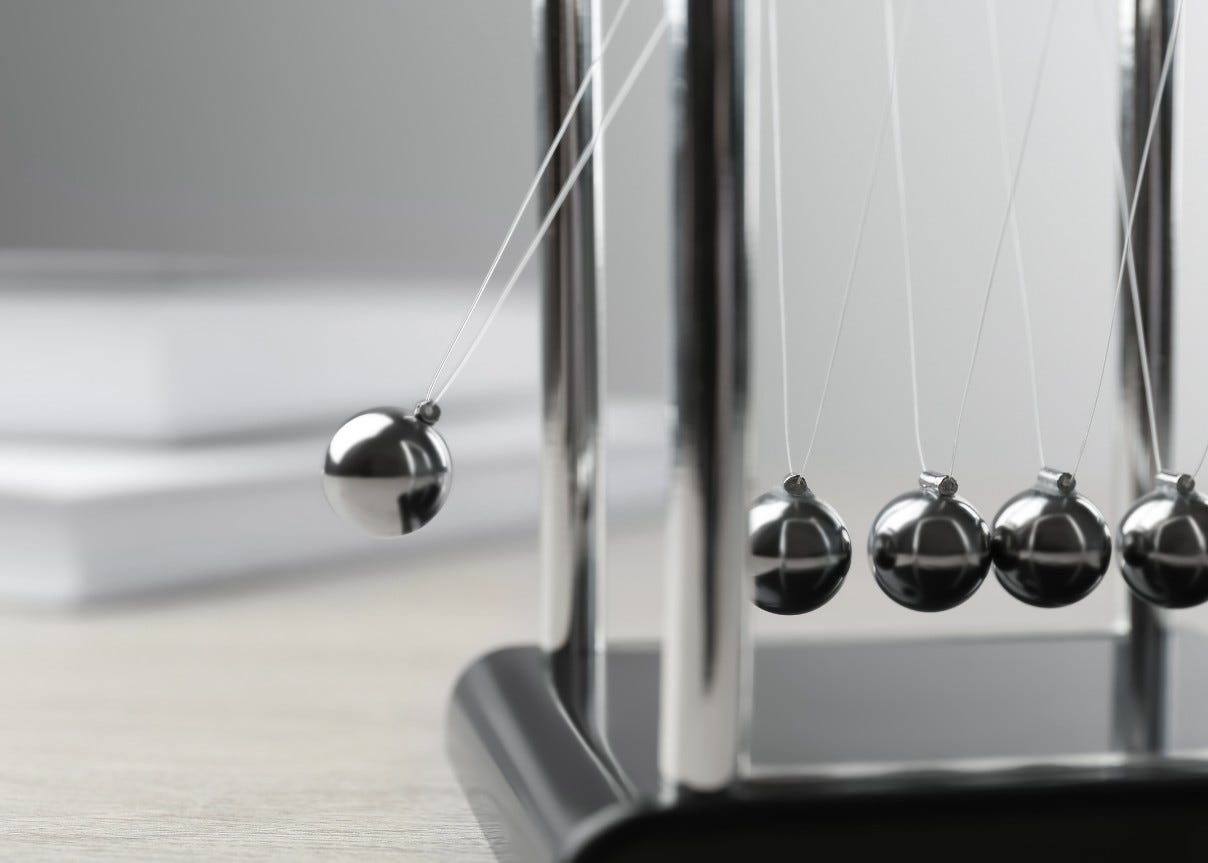
It is easy to understand the energetic meaning of karma when viewed through the lens of anger—there is an obvious before and after. Unfortunately, due to laws of causality, there will always be a price to pay. However, karma doesn’t operate according to the rules of our ego. We are not being punished nor rewarded.
I think of it as holding a bowl of water. When an outside stimulus comes along, a nudge on the bowl or a fingertip touching the surface, there will be ripples and waves in the bowl. What we do next determines whether the water will splash and spill, or dissipate back into calm. If we react and try to dodge, everyone gets wet and there won’t be much water left in the bowl. Conversely, if we do nothing, depending on the amplitude of the stimulus, it may allow the water to calm or we may still lose some water. Toward the goal of maintaining water in the bowl, doing nothing seems preferable.
Our experiences here, especially one as overt as anger, exist in polarity. All energetic expressions have a repressive and a reactive nature, so it can seem tempting to avoid the consequences of anger by shutting down. This can happen particularly after a shocking or traumatic event. However, this leads to a kink in the hose of one’s life force energy. These people may seem emotionally stable on the outside, but they often lack passion, playfulness, inspiration, or any zest for life. It’s like dropping the bowl entirely.
And so, here we are once again in the paradox.
We cannot completely prevent things from happening to our bowl of water—errant thrown pebbles, raindrops, bird poop, a stiff breeze, a gentle earthquake, the orbit of the Earth around the Sun. Life is motion and change. But sometimes, when we breathe a millimeter of space between our amygdala’s identification and our behavior, when we respond instead of react, we learn to Aikido the bowl of water, we learn to contact improv dance the bowl of water. We learn to connect to the energy all around us and play with it, therein understanding that rejection is impossible because we’ve never once in our lives been separate from the entirety of life all around us.
Whenever you are lost, stay in one place until you’re found.
We’re told this as children. For all the coaching, very few of us ever found ourselves in a situation where we’re lost in the woods or a large crowd, but still we hear the stories of how it saved someone.
And yet, many of us have been lost since the day we were born. Constantly fielding things, people, and events seemingly beyond our control. Confused by what’s happening, and unable to get a grasp on causality when we have the confounding factors of time and space separating us from the obvious inception points of it all. We go from temporary stability to temporary stability, rarely understanding the “temporary” part and letting our attachments to safety set us up for disaster and disappointment over and over again.
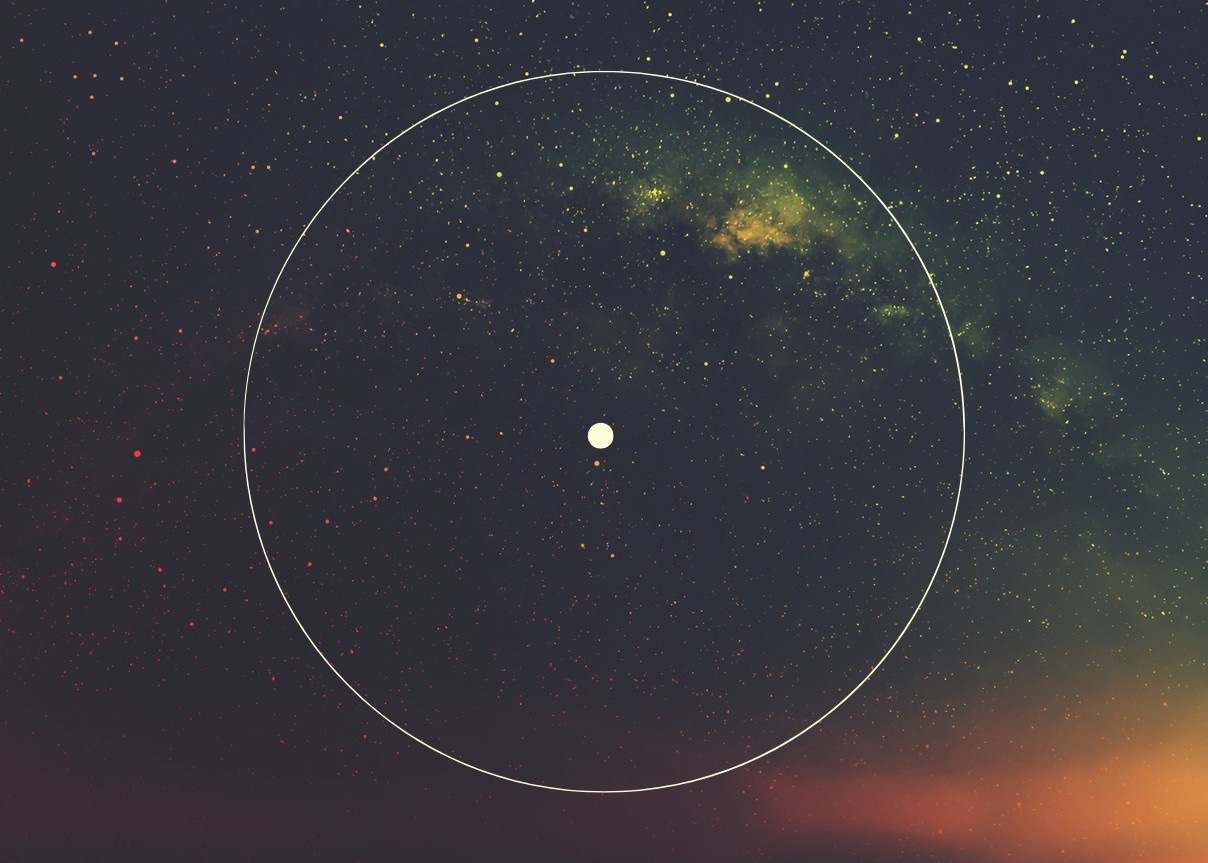
There is a reason we say we are “centered.” We have an inherent sense that coming to center is a returning to something prime. There’s a rightness to the feeling of it. We don’t like being “pulled off center,” which denotes a distraction. Centered, centeredness, central, heart center.
Where is the point in you that is equidistant from every point in your surface? From where do you radiate, and to where do you draw in?
There’s calm in the eye of the storm.
I remember someone telling me that no one was coming to save me. I sat with that, letting it echo and seep in. The first thought to arise: “Well…now what?”
As devastating as this can be for certain parts of ourselves, it was also empowering—a centering. When you’re not supposed to be anywhere else other than where you are right now, you can’t possibly be lost. When you understand your connection, you’re never separate or outcast. When you begin to really feel that your presence and experience here on this planet is as valid and worthy as anyone else’s, that absolutely nothing separates you from a celebrity, a homeless person, a doctor, a housecleaner, a bus driver, a restaurant server, a president, then you’re beginning to discover something.
We may experience discomfort and even danger in our physical body, but there is something bigger behind the scenes that is okay beyond all earthly happenings. We can sit in the middle of the hurricane, watching the winds and debris swirl around the eye of the storm, knowing we’re safe in center.
There will always be winds. There will always be debris. But center…well, that’s up to us.
Wonderful and useful framing, Karen. And the idea of emotions trying to think and thoughts trying to feel rings very true. No wonder we find ourselves confused. Bravo.